
Large-format advertising tarpaulins: materials, finishes and installation
- 04 Jun, 2026
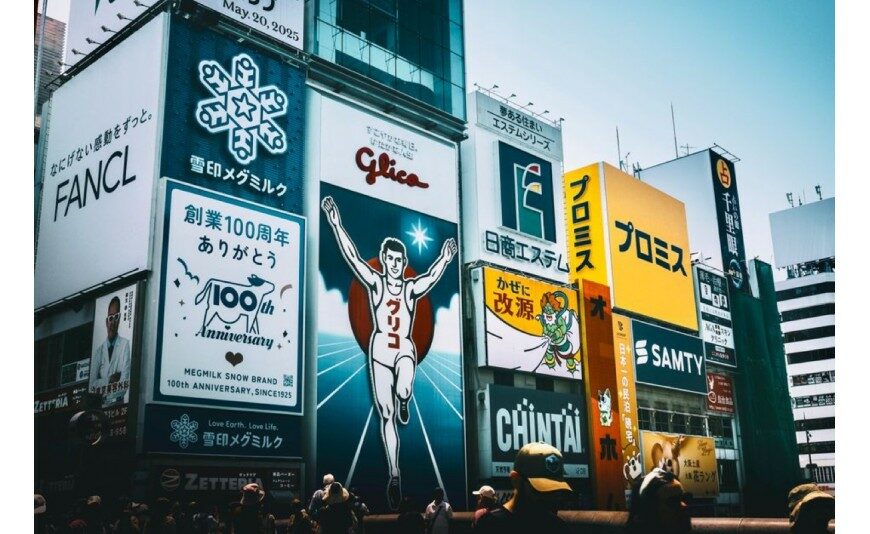
An advertising tarpaulin is often the largest piece a business or association owns: visible from dozens of metres away, it announces an opening, a feria, building works or support for a local club. But a successful tarpaulin isn't just about a good-looking design: the material, the finishes and the installation are what separate a piece that lasts for years from one that tears at the first gust of wind. Here's a practical guide to making the right choices, from the file right through to fixing it in place.
What is a large-format tarpaulin used for?
Large-format printing suits a wide range of uses. The most common ones in the Gers and Landes:
- Shop frontage: opening, sales or new signage across an entire storefront;
- Events and ferias: welcome banners, arches, dressing for stands and barriers;
- Building sites: scaffold tarpaulins in the company's colours, property development signage;
- Stadiums and sports clubs: pitch-side hoardings, supporters' banners, podium backdrops;
- Street banners: a one-off message strung between two points for a promotion.
Depending on the location, wind exposure and how long it will be displayed, the choice of material and finish will vary.
Which material to choose: PVC, micro-perforated or mesh?
Choosing the material is the most fundamental decision. Three main families cover most needs:
- Solid PVC (510 gsm): the reference tarpaulin. Sturdy, opaque and vividly coloured, it suits most uses on walls, structures or barriers. The 510 gsm weight offers a good balance of strength and weight; heavier options are used for highly exposed installations.
- Micro-perforated tarpaulin: covered in tiny holes, it lets the wind through while staying perfectly legible. It's the right choice for very windy locations (high facades, scaffolding, exposed pitch-side positions), since it reduces wind resistance and strain on the fixings.
- Mesh: an even more breathable openwork fabric, ideal for very large surfaces and site hoardings.
Tarpaulins can also be combined with other solutions (rigid panels, vinyl graphics): discover our expertise in large-format printing and signage, manufacturing and installation included.
The finishes that make a tarpaulin last
Once the material is printed, the finishing details around the edges are what guarantee long-term strength:
- Welded hems: the edge is folded over and heat-welded all the way round, reinforcing the area under the most strain and preventing tears starting from the edges;
- Eyelets: metal rings fitted into the hem every 30 to 50 cm, used to stretch the tarpaulin taut with cable ties, bungee cords or rope;
- Pole pockets: a welded fold forming a sleeve into which a pole or rod is slid, used to hang a banner or keep it perfectly flat.
The best approach: combine a welded hem with evenly spaced eyelets. This is the combination that spreads the strain and gives an outdoor tarpaulin its longevity.
Durability: UV, wind and rain
A quality tarpaulin is built for the outdoors. UV-treated inks and material keep colours vivid despite the sun; PVC, waterproof by nature, is unaffected by rain. That leaves the number one enemy: wind. The larger and more solid the surface, the greater the wind resistance — which is why micro-perforated or mesh materials make sense in exposed locations. A tarpaulin that's properly stretched taut, with no pockets or creases, always ages better than a loose one that takes a battering with every gust.
Installation and fixing: best practice
Installation is just as important for lifespan as it is for appearance:
- Stretch the tarpaulin evenly, starting from the corners and then working through every eyelet;
- Use fixings suited to the surface (cable ties, tensioners, rope) and check their condition over time;
- On a large exposed surface, favour micro-perforated material and a tubular frame;
- Comply with local outdoor advertising regulations, which govern dimensions and locations depending on the local authority.
For large-format work, we handle both manufacturing and on-site installation: careful fitting guarantees a professional result and long-lasting durability. Whether you're preparing for an event or a feria or a permanent installation, we come to you to install it properly.
Files and resolution for very large formats
Contrary to popular belief, a tarpaulin several metres wide doesn't need a huge resolution, since it's viewed from a distance. The essentials: supply a vector file (logo, text) wherever possible; for photos, 72 to 150 ppi at actual size is usually enough for a sharp image viewed from several metres away. Also allow for bleed, and keep text well away from the edges where the hems and eyelets sit. If in doubt, our studio checks your files and adjusts the layout — that's exactly the benefit of using a local printer.
Based in Manciet (32) and labelled Made in Occitania, we produce the vast majority of your orders on-site (94% in 2024-2025) and 100% in France. From material to installation, you keep a single point of contact, with no call centre, and delivery across France and Europe. Let's talk about your tarpaulin: we'll provide a free quote within 72 hours and advise you on the material and finishes best suited to your project.
Further reading
- 30 Jul 2026Signage and window graphics regulation: 2026 guide (Gers, Landes)
- 01 Jul 2026Mandatory Notices on Your Printed Materials | 2M Numérique
- 04 Jun 2026Roll-Up or Kakemono: Which One for a Stand?
- 04 Jun 2026Rigid Panel or Banner: Which Outdoor Material?
- 04 Jun 2026Adhesive Labels: Paper or Vinyl, How to Choose
 Français
 English
 Español