Cotton, Polyester or Organic: Choosing the Right Fabric to Personalise
- 04 Jun, 2026
Choosing the right fabric to personalise means juggling several factors at once: the comfort of the person wearing it, how well it holds up over time, the quality of the print, and the budget. A t-shirt for a one-off event doesn't have the same requirements as a work polo worn every day, or a sports club shirt. For businesses, associations and clubs across the Gers and the Landes, here's a clear guide to help you get the fabric, weight and printing technique right.
Cotton, Polyester, Poly-Cotton: The Main Fabric Families
The choice starts with the fibre, and each has its own personality. Here are the four families you'll come across most often:
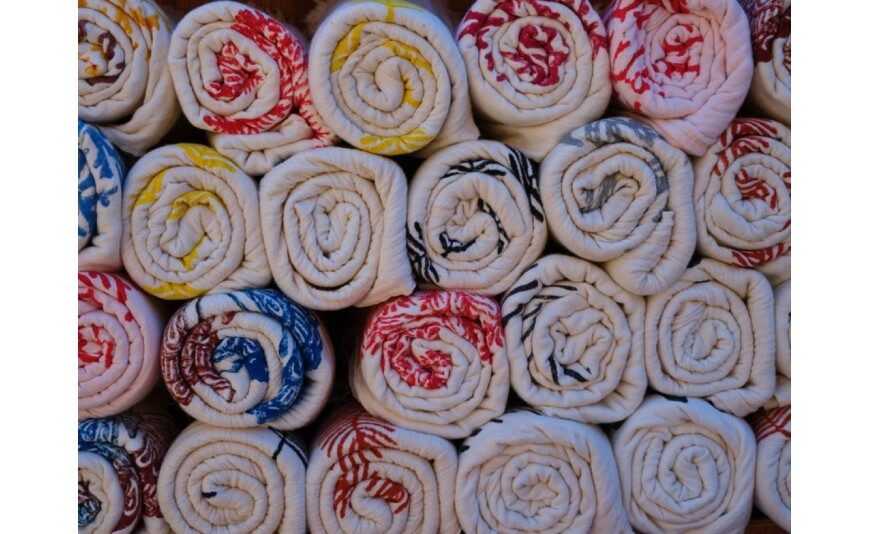
- Cotton: natural, soft and breathable, it's the reliable choice for the classic t-shirt. Comfortable for everyday wear, it takes most printing techniques very well, though it can shrink slightly on its first wash.
- Polyester: technical and lightweight, it dries fast, wicks away sweat and holds its shape. It's the fabric behind sportswear and team shirts, built for movement.
- Poly-cotton: a cotton-polyester blend that combines the pleasant feel of cotton with the durability of synthetic fibre. A good compromise for heavy use and easy care.
- Organic or recycled cotton: grown without pesticides or made from reclaimed fibres, it appeals to organisations mindful of their footprint and often carries an environmental label.
There's no single "best" fabric in absolute terms: it all depends on the use you have in mind. That's exactly what we look at with you before any order of personalised workwear.
Fabric Weight: The Number That Changes Everything
Expressed in grams per square metre (g/m²), fabric weight indicates the density of the material, and therefore its thickness, durability and perceived quality. It's a far more reliable guide than a simple feel of the fabric. As a rule of thumb, keep a few figures in mind: a lightweight t-shirt sits around 140 to 150 g/m², ideal for a promotional campaign where cost matters. A good-quality t-shirt, denser and more durable, sits around 180 to 200 g/m². A sweatshirt or a piece of workwear easily reaches 280 g/m² and beyond, for warmth and durability. The higher the weight, the more premium the garment looks and the longer it lasts, but the heavier and pricier it becomes. It's up to you to strike the right balance for the message the garment needs to send.
The Right Fabric for Every Use
The right approach is to start from what the garment is for. For an event or a promotional giveaway, a lightweight cotton t-shirt in bulk does the job perfectly: visible, affordable, quickly forgotten without regret. For sport, breathable polyester is the go-to, keeping pace with effort and drying fast, just what clubs and associations expect for their teams. For work, you aim for toughness: dense poly-cotton or heavy cotton, able to withstand repeated washing without losing shape. And for an eco-friendly approach, organic or recycled cotton carries a genuine brand message, valued by local authorities and mission-driven organisations.
Comfort, Durability, Budget: The Trade-Off to Weigh Up
No single fabric ticks every box at once. Comfort leans towards cotton and natural fibres, soft against the skin. Durability favours polyester and higher weights, which resist friction and repeated washing. Budget, in turn, naturally follows the weight and quality of the fibre. A disposable promotional t-shirt and a reception polo worn every day call for neither the same fabric nor the same investment. Our role is to help you decide based on the garment's real expected lifespan, without overpaying or sacrificing feel. For a personalised t-shirt, this simple trade-off avoids plenty of disappointment.
Fabric Choice Drives the Printing Technique
A last point that's often overlooked: the fabric you choose directly determines how it can be printed. Cotton takes screen printing very well for large runs, as it does flocking for small quantities. Polyester and complex, full-colour visuals call instead for DTF (direct-to-film transfer), flexible and precise on technical fibres. Embroidery, meanwhile, elevates polos and jackets with a durable, premium finish. Rather than picking a technique at random, it's better to think about fabric and printing method together: our article on personalised textile printing techniques covers flocking, screen printing, embroidery and DTF in detail. From a single piece to a full production run, we adapt the process to your garment.
Based in Manciet (32), a workshop certified Made in Occitania, we produce the vast majority of your orders on-site (94% in 2024-2025) and 100% in France, with a single point of contact from consultation to delivery. Tell us about your project, your volumes and the intended use: we'll advise you on the right fabric, weight and technique, and send you a free quote within 72 hours, with delivery anywhere in France and Europe. Getting the fabric right is already half the job of a successful personalised garment.
Further reading
- 30 Jul 2026Signage and window graphics regulation: 2026 guide (Gers, Landes)
- 01 Jul 2026Mandatory Notices on Your Printed Materials | 2M Numérique
- 04 Jun 2026When Should You Order Your Print? The Lead Time Guide
- 04 Jun 2026Business Cards: 7 Mistakes to Avoid When Printing
- 04 Jun 2026Adhesive Labels: Paper or Vinyl, How to Choose
 Français
 English
 Español