
Business Cards: What Paper Weight and Finish Should You Choose?
- 12 May, 2026
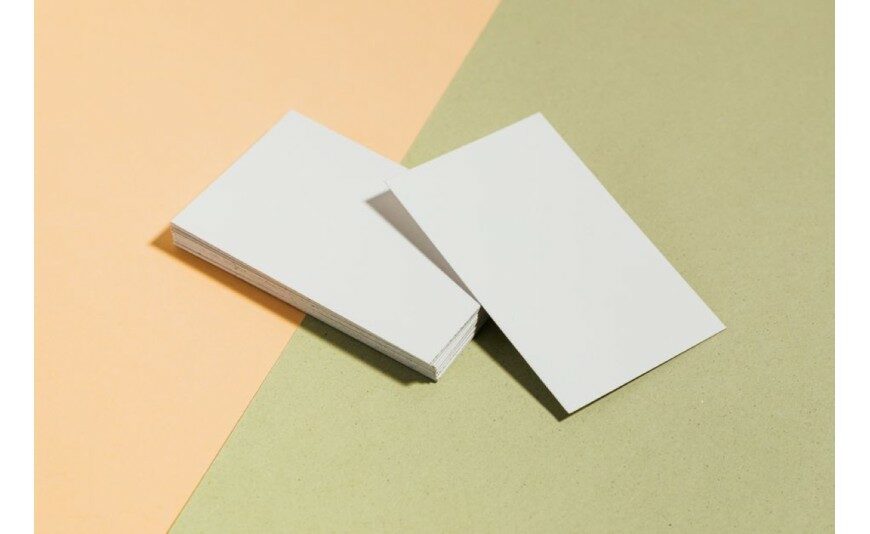
Your business card is still one of the most cost-effective tools in your communication kit. But it only works if you choose the right paper and the right finish. Here are our guidelines, honed over years of printing in our workshop in the Gers.
Paper weight: first impressions are all about touch
Paper weight, measured in gsm (grams per square metre), determines the thickness and stiffness of the card. Below 300gsm, a business card feels cheap. Our recommendations:
- 300gsm: the acceptable minimum, for tight budgets.
- 350gsm: the best balance of quality and price, our standard.
- 400gsm and above: for a premium card, stiff and long-lasting.
- Duplex (double-layered): two papers bonded together, up to 600gsm, for a high-end, cardboard-like feel.
Lamination: protecting and enhancing
Lamination is a film applied to the card. It protects it and radically changes its look and feel:
- Matte: elegant, understated, glare-free.
- Gloss: vivid colours, dynamic.
- Soft-touch: an irresistible velvety feel, very much on-trend.
The finishing touches that make the difference
To really leave a mark, you can go further: hot foil stamping (a logo that shines in gold or silver), 3D spot varnish (a localised matte/gloss contrast), rounded corners or a custom die-cut shape. These options turn an ordinary card into a memorable object.
Which paper for which business?
A law firm will lean towards a thick, understated matte finish; a creative professional might go for soft-touch and foiling; a craftsperson may prefer a natural recycled stock. Whatever the choice, we always recommend a proof before printing, so there are no surprises.
Want cards that truly reflect who you are? Check out our card printing service or request a free quote.
Further reading
- 30 Jul 2026Signage and window graphics regulation: 2026 guide (Gers, Landes)
- 01 Jul 2026Mandatory Notices on Your Printed Materials | 2M Numérique
- 04 Jun 2026Roll-Up or Kakemono: Which One for a Stand?
- 04 Jun 2026Rigid Panel or Banner: Which Outdoor Material?
- 04 Jun 2026Adhesive Labels: Paper or Vinyl, How to Choose
 Français
 English
 Español