
Construction Site Signs: Mandatory Information, Formats and Materials
- 04 Jun, 2026
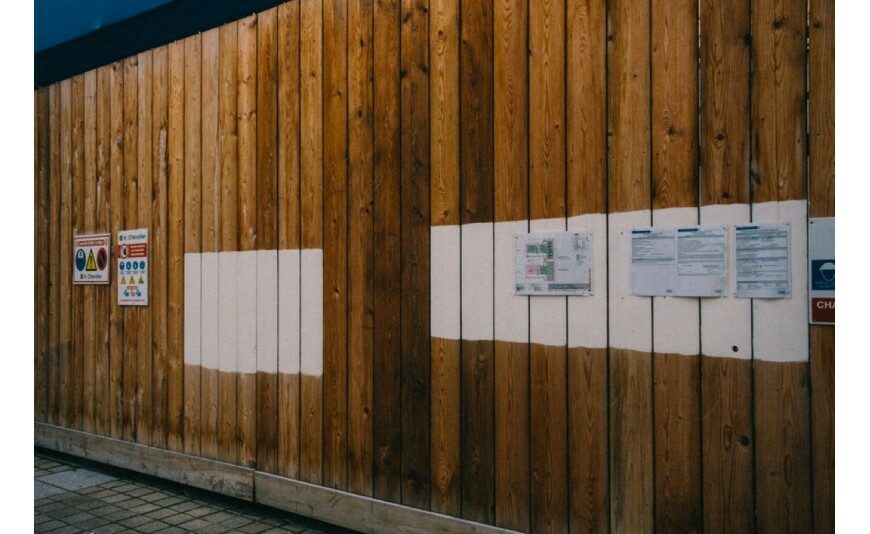
A sign planted at the entrance to a building site is something we all walk past every day, without necessarily realising it plays two quite distinct roles. On one hand, the statutory notice, which displays your planning permission and starts the third-party appeal period running; on the other, the company sign, which announces your business on the ground. Get the first one wrong and you could weaken your permit; get the second one wrong and it goes unnoticed. Here's what tradespeople, project owners and businesses in the Gers and Landes need to know to get it right.
Two Signs, Two Functions Not to Confuse
The planning permission notice is a legal requirement as soon as you're granted a building, development or demolition permit, or file a preliminary declaration of works. It must remain visible from the public highway for the entire duration of the works. It's this notice that starts the two-month third-party appeal period running: without continuous, proper display, that period never begins, and your permit can still be challenged long after the work is finished.
The company sign, on the other hand, isn't mandatory at all, but it's well worth having: business name, logo, phone number, and sometimes a visual of the finished project. On a visible site, it's a free shop window working for you for weeks on end. The two can happily coexist, or even be combined on a single, well-designed panel.
Mandatory Information on the Planning Notice
The statutory notice isn't something to improvise: its content is regulated, and certain information must appear on it. It generally includes:
- The name of the permit holder;
- The permit number and date of issue, along with the name of the town hall (mairie) that granted it;
- The nature of the works (construction, extension, renovation, demolition, etc.);
- The floor area and, for a house, the height of the building;
- For a plot of land, the surface area concerned and the number of lots, if any;
- The address of the town hall where the file can be consulted, and the appeal procedure.
The text must stay legible from the street, which calls for large enough lettering and a contrasting background. It's worth checking the exact requirements for your type of permit with your local council before printing.
Common Formats
For the planning notice, the rule sets a minimum size: every piece of information must stay legible, which in practice means a rectangular format of at least 80cm a side. The market standard is 80 × 120cm, a size that's perfectly suited and easy to mount. For a simple "works in progress" company sign, 60 × 80cm often does the job, depending on reading distance, while very large sites justify banners several metres wide, stretched across a site hoarding. The right approach: choose the format based on the distance from which the sign needs to be read.
Which Material Holds Up Outdoors?
A construction site sign lives outdoors for months on end, exposed to sun, rain and wind. The material makes all the difference to how well it holds up:
- Akilux (corrugated PVC): lightweight, affordable, ideal for statutory notices and sites running a few months;
- Dibond (aluminium composite panel): rigid, premium and highly durable, perfect for a company sign that needs to stay pristine for a long time or be reused;
- Banner with eyelets: the solution for large surfaces and hoardings, stretched over a frame or fence.
Whatever the material, insist on printing with UV-resistant inks: this is what stops colours fading and text becoming unreadable after a few weeks in full sun. Choosing the right material from the start avoids having to reprint partway through the job. On the production side, our large-format and signage expertise covers exactly these rigid and flexible materials, with printing that stands up to the weather.
Simple to Install, But Worth Doing Properly
Installation determines how long a sign lasts. On bare ground, two battens or stakes driven in firmly are enough for an Akilux panel, provided it's well secured against the wind; on a fence or hoarding, cable ties or screws with washers work best, and for a banner, it's the eyelets that do the job. The key is to keep the sign upright, legible and facing the public highway, and to check it regularly: a fallen or faded notice no longer holds any legal value. The tradespeople and construction businesses we work with appreciate having both production and installation advice handled by the same team.
Your Local Printer in the Gers and Landes
Based in Manciet (32), a workshop carrying the Made in Occitania label, we produce the vast majority of your orders on site (94% in 2024-2025) and 100% in France. Whether your site is in Auch, Mont-de-Marsan or a village in the Armagnac, you keep a single point of contact from advice through to delivery, with no call centre. Businesses and individuals in and around Auch, let's talk about your sign: we'll send you a free quote within 72 hours and deliver throughout France and Europe. Whether it's a compliant notice or an eye-catching site sign, get it right from the start.
Further reading
- 30 Jul 2026Signage and window graphics regulation: 2026 guide (Gers, Landes)
- 01 Jul 2026Mandatory Notices on Your Printed Materials | 2M Numérique
- 04 Jun 2026Roll-Up or Kakemono: Which One for a Stand?
- 04 Jun 2026Rigid Panel or Banner: Which Outdoor Material?
- 04 Jun 2026Adhesive Labels: Paper or Vinyl, How to Choose
 Français
 English
 Español