
When Should You Order Your Print? The Lead Time Guide
- 04 Jun, 2026
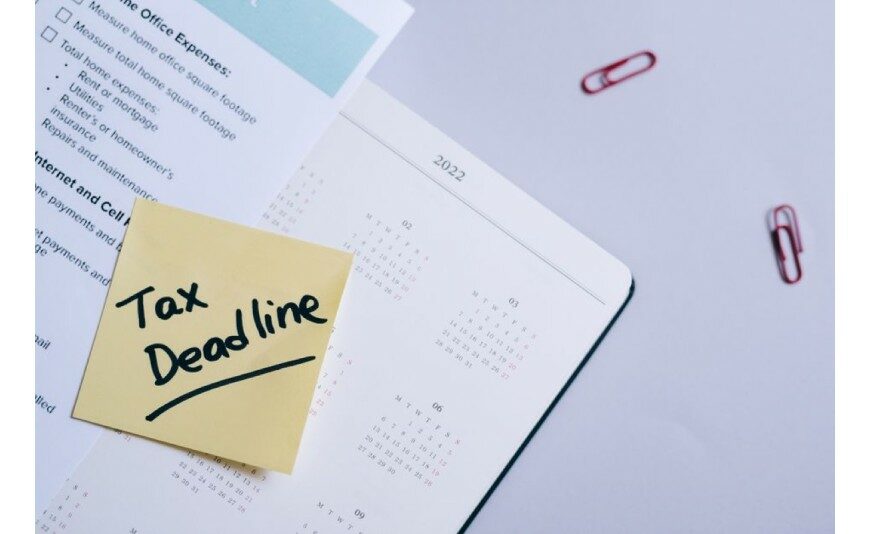
"I need them by Friday." Every printer hears that sentence every week — and often on the Tuesday. But print doesn't happen at the click of a button: between design, sign-off, production, finishing and delivery, several stages follow one another, each with its own rhythm. Planning your order ahead isn't extra red tape: it's the guarantee of a polished result, delivered on time, without paying a rush premium. For shops, tradespeople, associations and local authorities across the Gers and the Landes, here's a clear guide to knowing when to order.
Why Planning Ahead Changes Everything
Ordering late exposes you to three risks. First, rushing: a sloppy file, a skimmed proofread, a typo that slips through. Second, extra cost: express turnarounds exist, but they take priority in the workshop and come at a price. Third, compromise: a substitute paper because yours is out of stock, a finish dropped for lack of time. Planning ahead, by contrast, gives the project room to breathe — comparing two layouts, approving calmly, choosing the right finish. A few extra days often turn a decent print job into a material that genuinely enhances your image.
The Stages That Take Time
Between your idea and the finished print in your hands, several phases follow each other, and each one counts towards the schedule:
- The design or studio work: graphic design, layout, sourcing a visual, adapting it across several materials. This is often the most variable stage, depending on whether you arrive with a ready-made file or a blank page.
- The proof (BAT): the sign-off back-and-forth before the run starts. Allow time for your own proofreading, sometimes over several rounds. Our article on the print proof covers what to check.
- Production: the actual printing, whose duration depends on the process, the quantities and the complexity of the material.
- Finishing: folding, creasing, cutting, laminating, foiling, binding… these finishes add anything from one to several days.
- Delivery or installation: shipping the parcel, or an on-site visit for a sign or a shopfront.
You can't skip a stage; you can only compress them. Which is exactly why it pays to start early.
Indicative Lead Times by Material
Not all print jobs take the same amount of time. Here are some rough guides, to be confirmed against your actual project — they always depend on quantities, finishes and the workshop's workload:
- Business cards, flyers, leaflets: these are the quickest. Once the proof is approved, producing a standard run takes a matter of a few working days.
- Brochures, catalogues, materials with premium finishes: assembly and finishing (foiling, spot varnish, binding) extend the timeline; allow extra margin.
- Large format with installation: signage, vehicle wraps, window graphics or banners combine production and an on-site visit. You need to fix an installation date, allow for weather on an outdoor job and, sometimes, a permit. This is the item to plan furthest in advance.
- Bulk personalised workwear: flocking, screen printing, embroidery or DTF on a large quantity of garments require preparation and production time proportional to the volume — a single t-shirt is quick, two hundred embroidered pieces far less so.
In short: the more technical the material, the more it needs installing, or the larger the quantity, the earlier you should order.
A Fixed-Date Event: The Golden Rule
Trade show, opening, festival, election, end-of-year greetings: when the date can't move, it's up to you to anchor the schedule working backwards. The right approach is to start from the event date and work backwards: block out the delivery or installation margin first, then production and finishing, then the proof, and finally the design. Always keep a few days' buffer for the unexpected — a visual to touch up, an extra round of sign-off. For a large-scale operation, in a town like Auch, it's best to get in touch several weeks ahead. Discover our print shop in Auch and its surrounding area.
The Role of the 72-Hour Quote
Planning ahead starts with getting a price. At 2M Numérique, your free quote reaches you within 72 hours: you quickly know the cost, the options and, above all, the realistic timeline for your material. That's when we map out the schedule together, and tell you honestly whether your deadline is achievable or needs adjusting. A single point of contact follows your project from consultation to delivery — no call centre, a real person who knows your project. To explore the full range of our expertise, browse our printing section, from commercial print materials to large format.
Based in Manciet (32), a workshop certified Made in Occitania, we produce the vast majority of your orders on-site (94% of 2024-2025 volumes) and 100% in France, with delivery anywhere in France and Europe. Got a deadline to hit? Don't leave it to the last minute: tell us about your project and receive your free quote within 72 hours. Planned well, a print job always arrives on time.
Further reading
- 30 Jul 2026Signage and window graphics regulation: 2026 guide (Gers, Landes)
- 01 Jul 2026Mandatory Notices on Your Printed Materials | 2M Numérique
- 04 Jun 2026Cotton, Polyester or Organic: Choosing Your Custom Fabric
- 04 Jun 2026Business Cards: 7 Mistakes to Avoid When Printing
- 04 Jun 2026Adhesive Labels: Paper or Vinyl, How to Choose
 Français
 English
 Español