
Print Finishing: Folding, Creasing, Perforating and Finishes
- 04 Jun, 2026
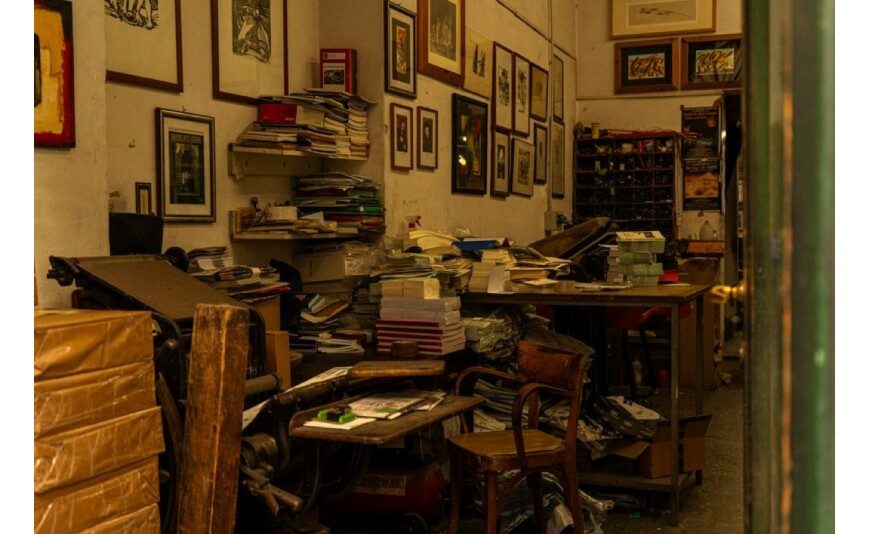
Once the ink is dry, the printer's job isn't over. A three-panel leaflet, a business card with a silky-soft feel, a tear-off pad with detachable coupons, or a bound catalogue… all of these start life as a single large sheet, printed flat, that then needs to be folded, creased, cut, perforated and finished. This is what's known as finishing: all the operations that happen after printing to give a piece its final form. For shopkeepers, tradespeople and associations across the Gers and Landes, understanding these steps helps you choose the right material and prepare a file with no nasty surprises.
What Exactly Is Finishing?
Finishing covers all the physical transformations applied to a printed sheet. Where printing lays down the colours, finishing creates the object: it folds, trims to the right dimensions, perforates, staples, glues, rounds corners and applies surface finishes. The same design can end up as a plain flyer or an elegant leaflet, depending on how it's folded and finished. On our commercial print products, these operations are built into the quote: this is where the difference is made between an ordinary document and a piece that showcases your image.
Folding: From Flyer to Leaflet
Folding is the star operation of finishing: it turns a sheet into several panels and structures the way your message is read. The most common folds are:
- The roll fold: panels fold in on one another, ideal for a three-panel leaflet such as a menu or sales brochure;
- The accordion fold (or zigzag fold): panels alternate direction one way then the other, perfect for unfolding a programme or a timeline;
- The gate fold: the sheet folds in half, then in half again, for a compact format that opens out wide;
- The cross fold: two perpendicular folds, used for plans, road maps or large posters designed to slip into a pocket.
The direction of the fold is never a minor detail: it guides the eye, showcases the cover, and determines the order in which information is discovered.
Creasing: Folding Heavy Stocks Without Cracking
The thicker the paper, the more likely it is to crack at the fold, especially on laminated covers. Creasing solves this problem: it lightly compresses the paper along a line to create a clean hinge. The fold then happens cleanly, with no cracking or fibre whitening. This becomes essential above roughly 170gsm, and is a must for catalogue covers, folded greeting cards, or any premium piece.
Perforating, Trimming and Binding
Perforating creates a line of small holes that lets part of the printed piece be cleanly torn off: it's what makes discount coupons, ticket stubs, tear-off pads and reply slips possible. Trimming, meanwhile, is the cutting stage: the guillotine cuts the sheets to their exact dimensions and removes the bleed margins. Finally comes binding, which joins the sheets of a booklet or catalogue together: saddle stitching (two staples at the centre fold), perfect binding with a square spine, or spiral binding for a notebook that opens flat.
The Finishes That Make the Difference
Beyond shaping, certain surface finishes lift the result and protect the printed piece. Laminating applies a matte, gloss or soft-touch film: it adds strength, deepens colours and gives a pleasant feel, much loved on business cards and covers. Spot varnish lays a glossy layer over specific areas only (a logo, a title) to create a contrast of texture. Hot foiling, finally, applies a gold, silver or copper metallic film to striking effect on a greeting card or wedding invitation.
Preparing a File That Accounts for Finishing
Good finishing starts as soon as the file is created. A few habits avoid nasty surprises: allow the right bleed (3 to 5mm beyond the trim size) so the cut doesn't leave a white sliver, and keep important text and elements well clear of the edges. Plan for the fold direction by building your layout panel by panel, in the actual reading order once folded. Mark creasing, perforation and spot varnish areas on a dedicated layer. And whenever in doubt, talk it through beforehand: that's the whole benefit of a local printer like our Eauze printing workshop, which checks your file before it goes to press rather than discovering a problem on delivery. For more advice on materials and finishes, browse our blog.
From fold advice to finish selection, finishing deserves real attention: it's what gives your printed pieces their look and their durability. Based in Manciet (32), a workshop carrying the Made in Occitania label, we produce the vast majority of your orders on site (94% in 2024-2025) and 100% in France, with a single point of contact from start to finish. Tell us about your project — leaflet, notepad, card or catalogue — and receive a free quote within 72 hours, delivered throughout France and Europe.
Further reading
- 30 Jul 2026Signage and window graphics regulation: 2026 guide (Gers, Landes)
- 01 Jul 2026Mandatory Notices on Your Printed Materials | 2M Numérique
- 04 Jun 2026Roll-Up or Kakemono: Which One for a Stand?
- 04 Jun 2026Rigid Panel or Banner: Which Outdoor Material?
- 04 Jun 2026Adhesive Labels: Paper or Vinyl, How to Choose
 Français
 English
 Español