
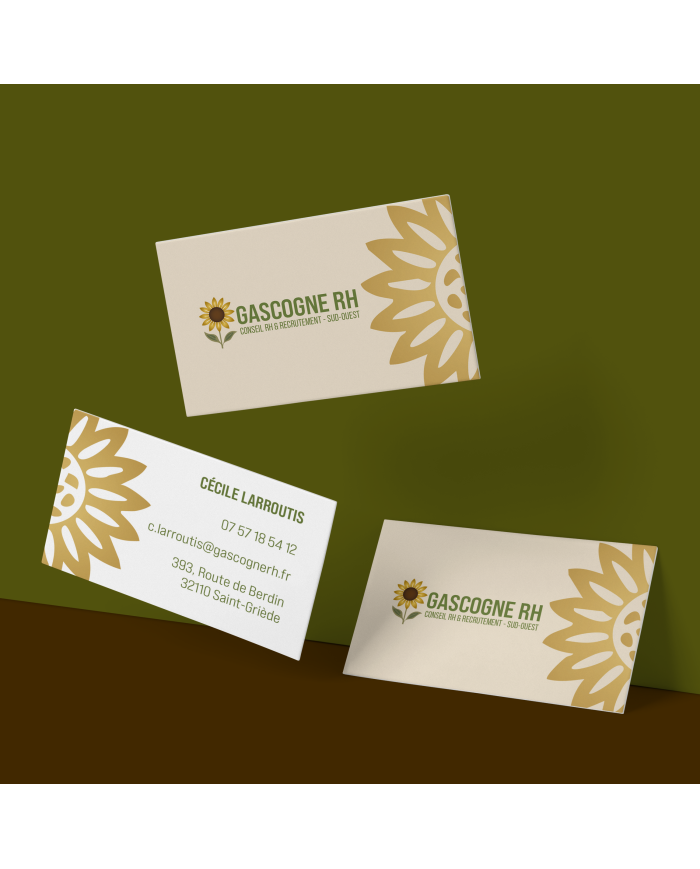
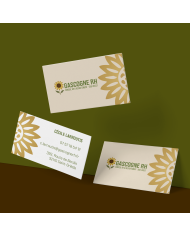


Which paper for your business cards?
350 gsm silk coated board is the reference: rigid, it survives a pocket and carries every lamination and varnish. The 300 gsm recycled and 283 gsm kraft Raw have an open, matt surface you can still write on with a pen. Rives Tradition 250 gsm and Rives Design 250 gsm add a felt grain you notice as soon as you pick the card up. Gmund Hanf 320 gsm and Gmund Stroh 300 gsm show their plant fibres, while Crush Mais 350 gsm combines that natural material with real stiffness. On uncoated stocks, expect slightly quieter colours than on screen, since the fibre absorbs ink.
Available sizes
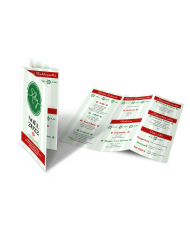
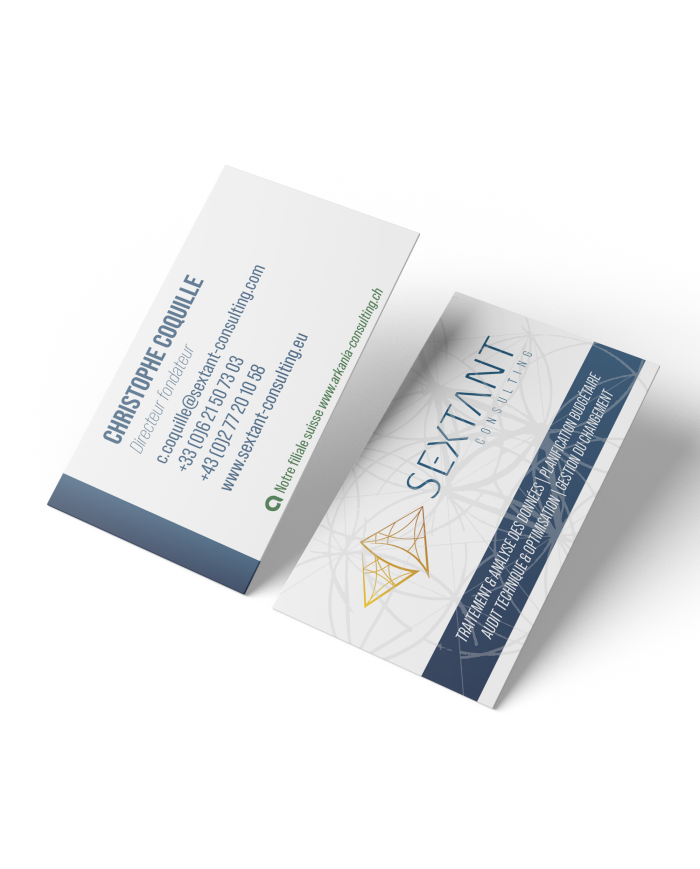
85 x 54 mm is the expected business card format, the one that fits a cardholder or a wallet without bending. The 65 mm square and the 60 mm round card break that habit: they are noticed and handled differently. Then come the two folded versions, both closing to 85 x 54 mm: 170 x 54 mm open folds across the width, 85 x 108 mm open folds in height. Each gives four pages, room for a list of services or directions behind your identity.
Finishes and double sided printing
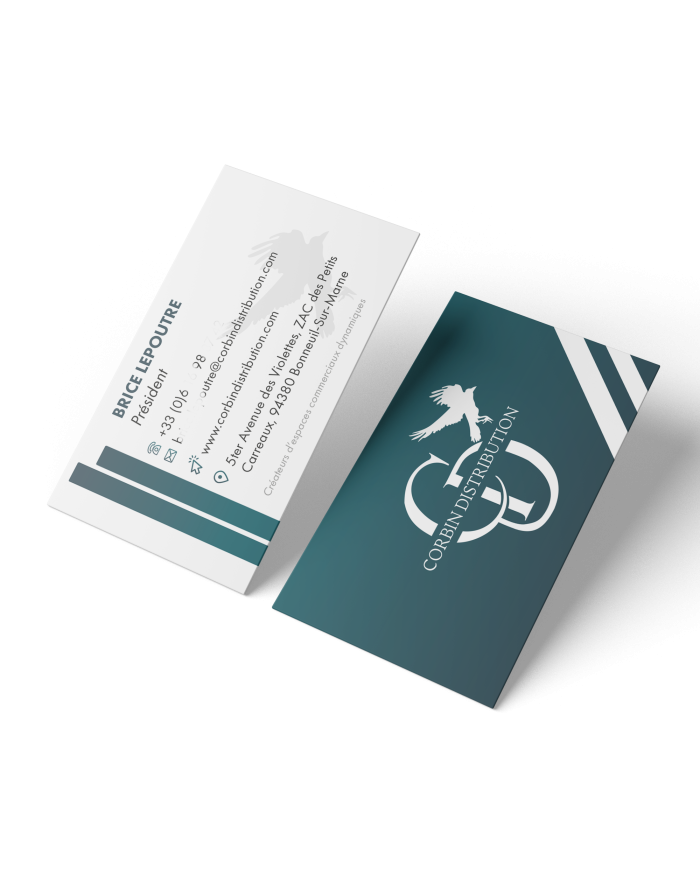
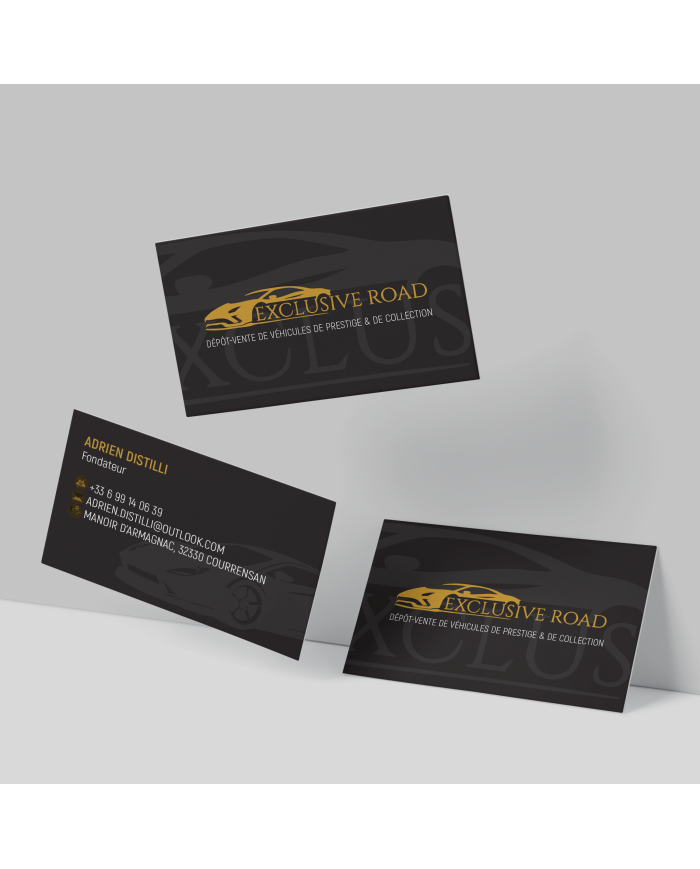
Printing both sides frees a whole face for contact details, social handles or a short message. Gloss, matt or soft touch lamination can go on the front only or on both sides. Spot varnish, flat or 3D, catches light on a logo. Gold or silver foiling on the front is the most visible option. Square corners, rounded corners or a round die cut set the outline. One practical note: if you often write an appointment on the back, leave that side unlaminated, because ink will not hold on film.
Preparing your file
PDF at 300 DPI, CMYK, 2 mm bleed, 4 mm safety margin, fonts converted to outlines. With rounded corners, keep elements a little further from the edge.
2M Numerique at your side
Your business cards leave our print works in the Gers: 100% Made In Occitanie, printed where we live and work, which is what our responsible approach is about. We check your file before printing and tell you if any detail sits too close to the trim.

 Français
 English
 Español