
The 6 Hidden Costs of Online Printing (and How to Avoid Them)
- 03 Jun, 2026
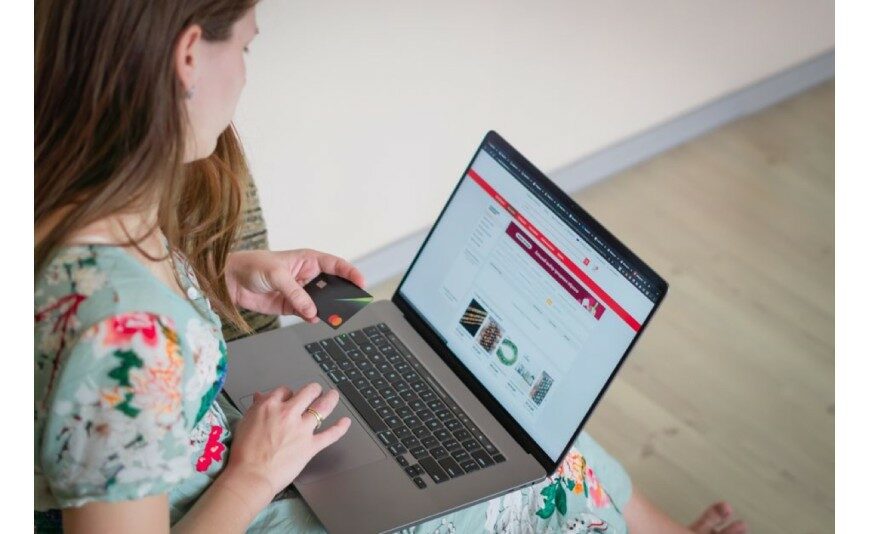
Flyers or business cards at an unbeatable headline price: on paper, online printing always looks like the cheapest option. But between the price you see and the amount you actually pay, the gap can be surprising. Before you check out, it's worth knowing the hidden costs of online printing: not scams, just fees that show up late, once you're already committed. Here are the six most common ones, and how to avoid them.
1. Shipping fees added at the end
This is the best-known one. The product price is front and centre, but the shipping fee only appears at checkout. For a bulky or heavy parcel (roll-up banners, boxes of posters, packaging), delivery can add up to a significant share of the total. And if you split your orders, you pay for shipping every single time. So the headline price doesn't always reflect the real cost once it lands on your doorstep.
2. Minimum order quantities
Many platforms work in quantity tiers. Below a certain volume, either the product isn't available at all, or the unit price jumps sharply. For a run of a few dozen pieces, you sometimes have to order far more than you need just to stay on an attractive rate. The surplus ends up gathering dust in a cupboard, and the advertised saving disappears.
3. The rush-order surcharge
The "cheap" price almost always corresponds to the standard, longest lead time. Need your materials for a trade show next week? The express option is billed separately, and the surcharge varies with the turnaround and the quantity. The more of a hurry you're in, the higher the bill climbs, and that cost isn't visible when you're comparing offers.
4. Billed file corrections
Your file isn't quite up to spec: no bleed, low resolution, the wrong colour mode, fonts that haven't been outlined. On an automated platform, there are two possible outcomes. Either the file goes through as is and the flaw ends up on the printed piece, or a fix is offered, billed as an extra. Either way, what you thought was sorted becomes one more line item, or worse, a printed defect.
5. The paper proof as a paid add-on
A digital proof for approval is often included, but the physical paper proof, the one that lets you see the true colour and the true feel of the material before the full run, is frequently a paid extra, with its own lead time. Skipping it to save money means risking a shade that doesn't match your brand guidelines once the whole batch arrives.
6. Reprinting at your own expense if the file wasn't properly prepared
This is the most painful hidden cost of all. On most platforms, you approve your file entirely at your own risk. If a mistake slips through, a trim that cuts into a logo, a colour that shifts, the reprint is on you. You pay twice and lose time into the bargain. Without a human check beforehand, the smallest oversight turns into an extra expense.
Facing these hidden costs: the transparency of a local printer
Working with a local printer changes the whole logic. At 2M Numérique, in Manciet in the Gers, the quote is clear and all-inclusive: you know exactly what you're paying before you commit, with no last-minute line item to discover. In practice, that means:
- A detailed quote covering printing, finishing and delivery of the finished piece, with no surprises at the final step.
- A human check of your file before we print: we spot missing bleed, resolution or colour issues, and flag them to you, instead of printing the flaw and billing you again for it.
- Upfront advice on the right material, the right quantity and the right lead time, so you avoid over-ordering or paying for unnecessary rush charges.
- A short supply chain, with most of our production done on site (94%, 2024-2025 figures): no middlemen stacking their margins, and a single point of contact across the Gers and Landes départements.
Being local also has a concrete advantage when it comes to delivery: depending on your situation, picking up on site or a local hand-off avoids some of the shipping costs of a bulky parcel. And for colour-sensitive projects, seeing a physical proof in person is always more reliable than a screen. If you're still weighing up the two approaches, our local vs. online comparison breaks down, point by point, what each option really delivers.
"Cheap" at the moment you click doesn't always mean economical in the end: what counts is the sum of everything, product, shipping, add-ons, corrections, and the risk of a reprint. The best way to know where you really stand is to compare on an honest basis. Get a first estimate with our online calculator, then request your free, clear, all-inclusive quote within 72 hours: you'll get a reliable figure, no hidden costs, and human advice to help you make the right choice.
Further reading
- 30 Jul 2026Signage and window graphics regulation: 2026 guide (Gers, Landes)
- 01 Jul 2026Mandatory Notices on Your Printed Materials | 2M Numérique
- 04 Jun 2026Roll-Up or Kakemono: Which One for a Stand?
- 04 Jun 2026Rigid Panel or Banner: Which Outdoor Material?
- 04 Jun 2026Adhesive Labels: Paper or Vinyl, How to Choose
 Français
 English
 Español